Ethical & Green Marketing
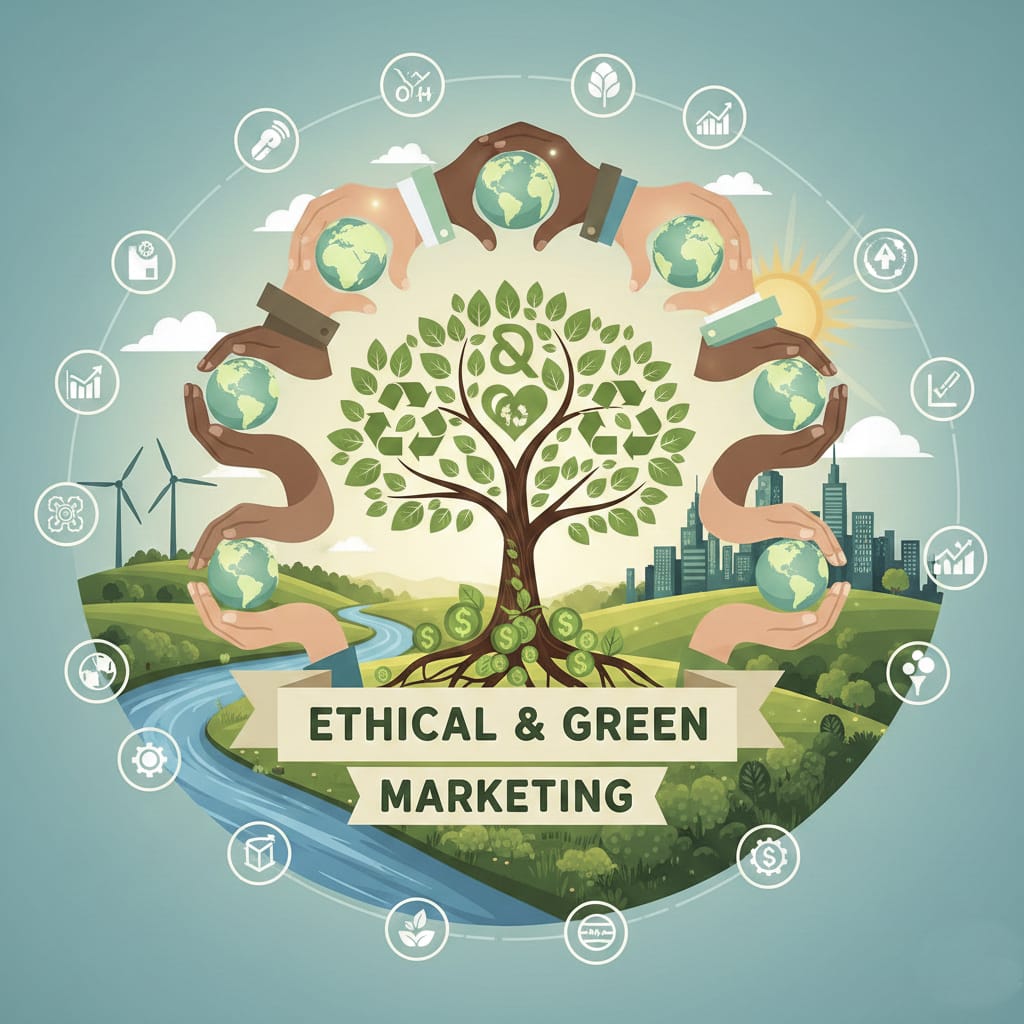
In the modern global economy, the traditional profit-at-all-costs mindset is being rapidly dismantled by a new paradigm known as Ethical and Green Marketing. This shift represents a fundamental transformation in how businesses interact with their customers, the environment, and society at large. At its core, ethical marketing is the application of moral principles to the marketing process, ensuring that every campaign, advertisement, and sales tactic is honest, fair, and responsible. It moves beyond the mere avoidance of legal trouble and strives to create a positive impact. Parallel to this is green marketing, a specialized subset that focuses specifically on the environmental sustainability of products and the brand’s overall ecological footprint. Together, these strategies form a cohesive framework for brands that wish to survive and thrive in an era where consumers are more informed, more skeptical, and more values-driven than ever before.
The rise of ethical marketing is largely a response to decades of consumer exploitation and manipulative advertising. In the past, “puffery” and exaggerated claims were seen as standard industry practice, but the digital age has brought a level of transparency that makes such tactics a liability. Today’s consumers have the tools to fact-check a brand’s claims in seconds, and social media provides a platform for rapid public accountability. Consequently, ethical marketing is no longer a luxury for niche brands; it is a survival requirement. It encompasses a wide range of practices, from ensuring supply chain transparency and fair labor conditions to protecting user data privacy and avoiding the targeting of vulnerable populations. When a brand commits to ethical marketing, it is essentially making a promise to its audience that its operations will not cause harm and that its messaging will remain rooted in objective truth
Green marketing specifically addresses the urgent global need for environmental stewardship. As the effects of climate change become more pronounced, the demand for sustainable products has moved from the fringes of the market to the mainstream. Green marketing involves highlighting the environmental benefits of a product, such as its biodegradability, its use of recycled materials, or its energy-efficient manufacturing process. However, this field is fraught with the danger of “greenwashing,” a deceptive practice where a company spends more time and money marketing itself as environmentally friendly than actually minimizing its environmental impact. To succeed in green marketing, a company must move beyond superficial claims and integrate sustainability into its core business model. This means looking at the entire lifecycle of a product, from raw material extraction to end-of-life disposal, and finding ways to reduce waste and carbon emissions at every stage.
One of the most significant drivers of this movement is the shifting demographic of the consumer base. Gen Z and Millennial shoppers, who now command trillions of dollars in purchasing power, are significantly more likely to support brands that align with their personal values. For these generations, a purchase is often seen as a political or social act—a vote for the kind of world they want to live in. They are looking for brands that take a stand on social justice issues, prioritize diversity and inclusion, and show genuine concern for the planet. For a marketer, this means that the “value proposition” of a product is no longer just about price and quality; it is also about the brand’s soul. If a company can demonstrate that it cares about more than its bottom line, it can build a level of brand loyalty that is virtually impenetrable by competitors who focus solely on transactional relationships.
The implementation of ethical and green marketing requires a complete internal alignment within an organization. It is not enough for the marketing department to create a “green” campaign if the operations department is still using non-recyclable packaging or if the human resources department is not ensuring a living wage for all employees. Authenticity is the currency of ethical marketing. When a brand’s external messaging matches its internal reality, it creates a powerful sense of trust. This trust is the foundation of long-term brand equity. In contrast, when there is a disconnect between what a brand says and what it does, the resulting backlash can be catastrophic. High-profile cases of corporate hypocrisy have shown that once a brand loses the trust of its audience, it is incredibly difficult and expensive to win it back.
From a strategic perspective, green marketing often involves a “cradle-to-cradle” approach. This philosophy views the waste from one process as the input for another, mimicking natural ecosystems. Brands that adopt this approach often find that it leads to unexpected innovations and cost savings. For example, reducing packaging doesn’t just help the environment; it also lowers shipping costs and storage requirements. Using energy-efficient machinery reduces utility bills while also lowering the carbon footprint. In this way, green marketing proves that there is no inherent conflict between profitability and sustainability. In fact, many of the world’s most successful companies are finding that “going green” is one of the most effective ways to drive operational efficiency and appeal to a broader, more conscious market.
Another pillar of ethical marketing is the concept of “Social Marketing,” which is the use of marketing principles to influence behaviors that benefit individuals and communities for the greater social good. This might include campaigns to promote public health, encourage recycling, or support local charities. When a brand engages in social marketing, it positions itself as a corporate citizen that is invested in the health of the society that supports it. This goes beyond simple philanthropy or “corporate social responsibility” (CSR) reports; it is about using the brand’s reach and influence to drive tangible, positive change. This level of engagement creates a “halo effect” around the brand, making consumers feel good about their association with the company.
However, the path to ethical and green marketing is not without its challenges. The global nature of modern supply chains makes it incredibly difficult to monitor every single link in the chain. A company might have an ethical policy at its headquarters, but its raw materials might be sourced from a supplier that uses exploitative labor practices. The idea of “supply chain ethics” becomes crucial in this situation Ethical marketers must conduct rigorous audits and hold their partners to the same high standards they set for themselves. Furthermore, the cost of sustainable materials and fair labor can sometimes lead to higher price points for the end consumer. The challenge for the marketer is to communicate the value of these choices so that the consumer understands why they are paying a premium and feels that the extra cost is justified by the positive impact of the purchase.
In the realm of digital marketing, ethical practices also extend to how data is handled. With the increasing prevalence of data breaches and the intrusive nature of some tracking technologies, data ethics has become a major concern for consumers. Ethical marketers prioritize the privacy of their users, providing clear and easy-to-understand opt-in procedures and being transparent about how data is stored and used. They avoid “dark patterns”—user interface designs that trick people into making choices they didn’t intend to make—and instead focus on building relationships based on mutual respect and consent. In a world where data is often called the “new oil,” treating it with care and ethical consideration is a major differentiator for brands.
Looking toward the future, the integration of technology like blockchain could further revolutionize ethical and green marketing. Blockchain offers the potential for immutable, transparent records of a product’s journey from the factory to the consumer. This would allow a customer to scan a QR code on a garment and see exactly where the cotton was grown, who sewed the shirt, and what the carbon footprint of the transportation was. As these technologies become more accessible, the “trust gap” between brands and consumers will narrow, and the companies that have already invested in ethical and green foundations will be the ones best positioned to lead.
In conclusion, ethical and green marketing is not a passing trend or a simple marketing tactic; it is a holistic approach to business that recognizes the interconnectedness of commerce, society, and the environment. It requires a move away from short-term gains in favor of long-term sustainability and trust. By prioritizing honesty, transparency, and responsibility, brands can build deeper connections with their customers and contribute to a healthier, more equitable world. The transition may be challenging, requiring changes in everything from sourcing and production to messaging and data management, but the rewards are substantial. Brands that embrace these principles will not only enjoy greater customer loyalty and brand equity but will also be the architects of a new, more conscious version of capitalism. The future of marketing is not just about selling a product; it is about selling a better way of doing business.